The Tip Jar Didn't Used to Own You — Here's How That Changed
The Tip Jar Didn't Used to Own You — Here's How That Changed
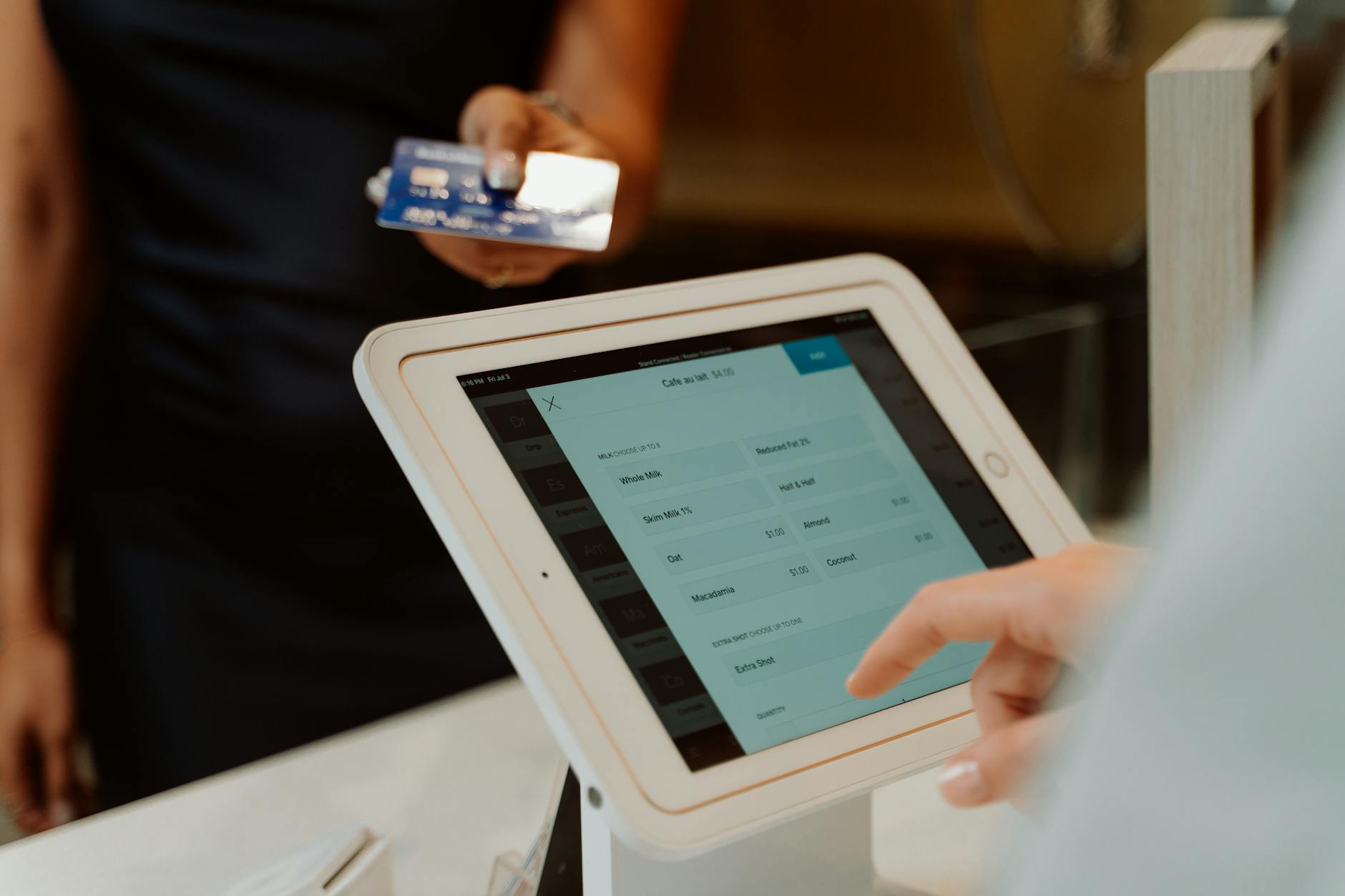
At some point in the last decade or so, buying a coffee started to feel like a moral test. You tap your card, the screen rotates toward you, and suddenly three buttons are staring you down: 18%, 20%, 25%. There's usually a fourth option — the one that lets you skip the whole thing — but it's smaller, grayed out, and positioned like a confession booth. You feel the barista's presence. You tap 20%.
This is not an accident.
American tipping culture is one of those systems that feels ancient and inevitable, like it was handed down from somewhere official. It wasn't. It's a patchwork of labor policy decisions, industry lobbying, and payment software psychology that accumulated over about a century — and most people have never stopped to ask how it actually got this way.
Where Tipping in America Actually Came From
Tipping existed in Europe long before it crossed the Atlantic, and when it arrived in the United States in the late 1800s, a lot of Americans hated it. Literally. There were anti-tipping movements in the early 1900s, and several states briefly tried to ban the practice outright. Critics argued that tipping was aristocratic, that it created an unequal relationship between giver and receiver, and that it was fundamentally un-American.
Those critics lost, largely because the restaurant and railroad industries found tipping very useful. If customers were expected to pay workers directly, employers could pay those workers less. The arrangement that emerged — especially after the railroad industry began staffing dining cars with Black workers who were paid almost nothing and expected to survive on tips — was less a social courtesy than a subsidy system for employers.
That structure got baked into federal law. The Fair Labor Standards Act, first passed in 1938 and amended repeatedly since, created what's known as a "tip credit" — a provision that allows employers to pay tipped workers a lower base wage, with tips expected to make up the difference. The federal tipped minimum wage has been stuck at $2.13 an hour since 1991. Thirty-three years. Some states have moved above that floor, but the underlying logic — that tips are how servers and bartenders actually get paid — remains the foundation of how the industry operates.
How 10% Became 20% Became "What's Wrong With You?"
For most of the twentieth century, 15% was considered a solid, respectable tip at a sit-down restaurant. Ten percent was acceptable for mediocre service. The jump to 20% as the new baseline happened gradually, driven partly by inflation, partly by industry norms, and partly by the simple fact that nobody formally sets these numbers — they drift upward through social pressure and repetition.
But the real acceleration came with the tablet payment terminal. When Square, Toast, and similar point-of-sale systems became standard equipment at coffee shops, fast-casual restaurants, and food counters in the 2010s, something subtle shifted. These platforms let businesses customize the default tip options displayed to customers — and research on choice architecture makes clear that the options you present, and the order you present them in, dramatically influence what people choose.
Studies on default options in behavioral economics consistently show that people tend to select whatever is pre-selected or most prominently displayed. When a screen shows 20%, 25%, and 30% as the three main choices, 20% stops feeling generous and starts feeling like the floor. Businesses didn't raise prices. They outsourced the discomfort of pricing to the customer, one screen rotation at a time.
Who Actually Benefits From Tips — And Who Doesn't
Here's where it gets more complicated than just "tip more, be a good person." In many full-service restaurants, tips don't stay with the server who earned them. Tip pooling — where tips are distributed across front-of-house staff, and sometimes back-of-house workers like cooks — is common and legal in most states under certain conditions. In some arrangements, a portion of tips goes to the house.
For workers in states with a lower tipped minimum wage, a bad night of tips doesn't just mean less money — it can mean earning below minimum wage, which employers are technically required to make up but don't always do in practice, especially in high-turnover environments where workers may not know their rights.
Meanwhile, tipping at the counter of a place where someone hands you a bag and wishes you a good day has become a genuine social expectation in a way it simply wasn't fifteen years ago. That's not a natural evolution of social norms. That's what happens when software companies make it trivially easy for any business to add a tip prompt and businesses have a financial incentive to do exactly that.
Why the System Persists
The honest answer is that tipping benefits the people with the most influence over whether it changes. Restaurant industry lobbying groups have successfully blocked federal tipped minimum wage increases for decades. Payment companies profit from transaction volume, which includes tips. And businesses get to advertise lower menu prices than they'd need to charge if they paid full wages directly.
Customers, meanwhile, have largely internalized the guilt without questioning the architecture. Most people who tip generously are doing so out of genuine goodwill toward workers — and that impulse is real and decent. But the system that converts that goodwill into a wage subsidy for employers was never designed with workers' best interests at the center.
The Takeaway
Tipping isn't going away anytime soon, and individual choices about how much to tip don't fix the structural problems underneath. But understanding that the percentage you consider "normal" was nudged upward by software defaults, that the practice itself was shaped by labor law designed to keep wages low, and that your moment of awkwardness at the payment terminal was engineered — that's worth knowing. It's not quite so simple as doing the right thing. It never was.