Diamonds Aren't Rare. The Illusion of Rarity Is Just Very Well Maintained.
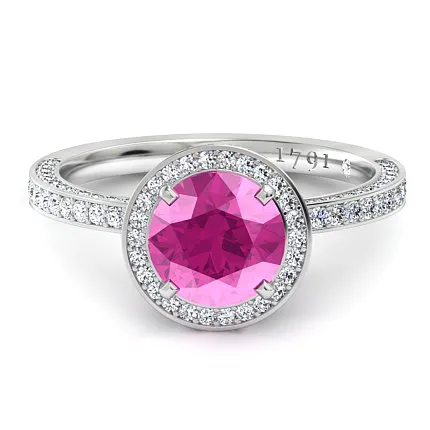
Photo: 1791Rings, CC BY-SA 3.0, via Wikimedia Commons
Diamonds Aren't Rare. The Illusion of Rarity Is Just Very Well Maintained.
At some point, probably before a significant relationship milestone, most Americans absorb the idea that diamonds are extraordinarily scarce. That scarcity is supposed to justify the price tag, reinforce the symbolism, and explain why a small, clear stone costs more than a used car. It's a tidy story. It's also largely a construction.
The actual supply of diamonds on Earth is enormous. What's scarce isn't the stone — it's the carefully managed flow of stones to market. That distinction matters a great deal, and understanding it changes how you see one of the most successful marketing campaigns in American commercial history.
The Company That Owned the Concept of Rarity
To understand diamonds, you have to understand De Beers. The South African mining conglomerate, founded in 1888 by Cecil Rhodes, spent most of the 20th century doing something genuinely extraordinary: controlling not just the supply of diamonds, but the cultural meaning attached to them.
By the 1930s, De Beers had consolidated control over the vast majority of the world's diamond production. Mines in South Africa, Botswana, Namibia, and eventually Russia fed into a single distribution system that De Beers operated. They decided how many diamonds reached the market in any given year. When supply threatened to outpace demand — which happened frequently, given how many diamonds were being pulled from the earth — De Beers simply held stones back, stockpiling them in vaults rather than letting prices fall.
This is not how genuinely scarce resources work. It's how manufactured scarcity works. The diamonds existed in abundance. The rarity was imposed.
But controlling supply was only half the equation. The other half was making sure people desperately wanted to buy what De Beers was carefully rationing.
The Ad Campaign That Rewired a Culture
In 1947, a copywriter at the Philadelphia advertising agency N.W. Ayer named Frances Gerety wrote a line almost as an afterthought at the end of a long day: A Diamond Is Forever.
De Beers adopted it. And over the following decades, it became arguably the most effective advertising slogan ever created — not because it described something true, but because it planted an idea so effectively that the idea became indistinguishable from fact.
The campaign did several things simultaneously. It tied diamonds to romantic permanence, making the stone a required symbol of engagement. It discouraged resale by associating that act with a kind of emotional betrayal — you don't sell something that is forever. And it successfully repositioned diamonds as objects of sentiment rather than commodities, which meant consumers stopped thinking about them the way they'd think about, say, a car or a piece of furniture.
Before the campaign, diamond engagement rings were not a universal American custom. By the 1960s, they essentially were. De Beers had created a tradition from scratch and then made it feel ancient.
What Diamonds Are Actually Worth on the Open Market
Here's where things get uncomfortable for anyone who has purchased a diamond, or plans to.
Unlike gold, which trades on open commodity markets at transparent prices, or even colored gemstones that can appreciate based on genuine rarity, diamonds have a resale problem that the industry doesn't advertise loudly. The markup between what a retailer pays and what a consumer pays is substantial — often 100 to 200 percent. But the more revealing number is what happens when you try to sell a diamond back.
Most secondhand diamonds sell for 20 to 50 percent of their original retail price, sometimes less. Pawn shops will often offer far lower. The secondary market is thin and unfavorable to sellers because there is, in fact, no real shortage of diamonds. The scarcity that justified the original price simply doesn't exist in the resale context, where De Beers' managed distribution system doesn't apply.
A 2006 Atlantic investigation found that even diamond dealers struggled to resell stones at prices close to retail. The value is almost entirely in the buying experience, the marketing, and the cultural story — not in any underlying scarcity that the market would naturally enforce.
Why the Story Persists
Several forces keep the diamond mythology intact.
The industry certifies its own products. The Gemological Institute of America grades diamonds, and its language — cut, color, clarity, carat — gives the impression of scientific precision and objective value. The grading is real; the implication that grades map neatly to market value is more complicated.
Retailers have every incentive to maintain the mystique. An industry that sells sentiment can't afford to have customers thinking too carefully about commodity economics.
And the cultural weight of the engagement ring tradition is now self-sustaining. Questioning whether a diamond is really necessary risks sounding like you're questioning the relationship itself — a social trap that the original De Beers campaign was partly designed to create.
Lab-grown diamonds, which are chemically and physically identical to mined stones, have started to crack the mythology. They sell for 50 to 80 percent less than comparable mined diamonds, which has forced the industry into the awkward position of arguing that identical stones aren't equivalent because one came from the ground. The argument is essentially about narrative, not chemistry.
The Takeaway
None of this means a diamond can't hold personal meaning. Objects mean what we decide they mean, and there's nothing wrong with that. But the belief that diamonds are expensive because they're rare — that the price reflects something geological and fixed — is a story that was written in a boardroom and refined in an ad agency.
The stone is real. The scarcity isn't quite so.