Your DNA Isn't 98% Garbage — Scientists Just Needed Better Tools to See What It Does
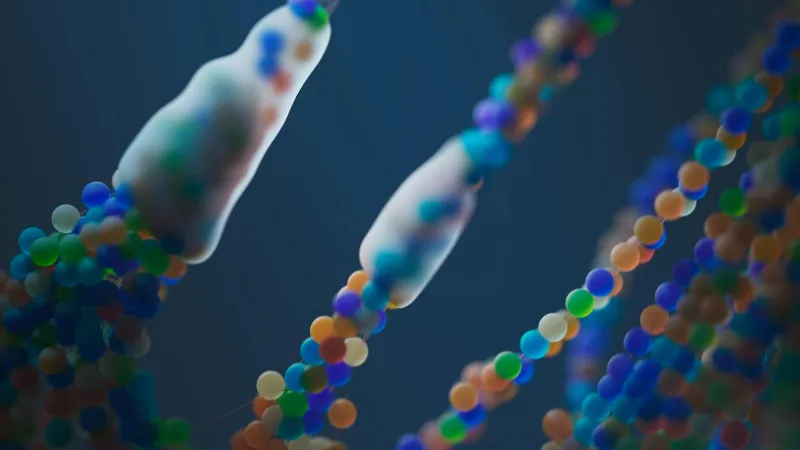
Your DNA Isn't 98% Garbage — Scientists Just Needed Better Tools to See What It Does
If you've ever wondered why humans aren't dramatically more complex than a fruit fly despite having roughly the same number of genes, you've probably heard the explanation: most of our DNA is useless "junk." This idea became so entrenched in popular science that people still repeat it today, long after researchers figured out it was wrong.
The junk DNA myth spread because it seemed to solve an embarrassing problem. When scientists first started mapping genomes in the 1970s and 80s, they discovered that only about 2% of human DNA actually codes for proteins — the molecules that do most of the work in our bodies. The remaining 98% didn't seem to do anything obvious, so researchers started calling it junk.
The Problem With Early Gene Hunting
Early geneticists were essentially treasure hunters looking for genes that make proteins. They had the tools to find these protein-coding sequences, but everything else in the genome looked like random noise. It was like trying to understand a symphony while only being able to hear the violin section.
The term "junk DNA" wasn't meant to be dismissive — it was scientific shorthand for "DNA we don't understand yet." But once the phrase entered popular science writing, it took on a life of its own. Magazine articles and documentaries started presenting junk DNA as evolutionary baggage, leftover code from our ancestral past that we just hadn't gotten around to deleting.
This explanation felt satisfying because it matched people's expectations about evolution. If natural selection was constantly improving organisms, why wouldn't it clean up useless DNA? The junk DNA story suggested that evolution was messy and imperfect, which seemed more realistic than imagining our genome as a perfectly designed machine.
What Scientists Actually Found
By the early 2000s, better technology started revealing what all that "junk" DNA actually does. Researchers discovered that much of it acts like a biological control panel, turning genes on and off at precisely the right times. Some sequences work like volume knobs, adjusting how much protein gets made. Others function as molecular timers, ensuring that genes activate in the correct sequence during development.
The ENCODE project, launched in 2003, systematically mapped these regulatory functions across the entire human genome. Their findings were striking: at least 80% of human DNA shows some kind of biological activity. Rather than being junk, most of our genome appears to be an elaborate instruction manual for when, where, and how much each gene should be expressed.
This regulatory DNA explains why humans can be so much more complex than organisms with similar numbers of genes. A fruit fly might have roughly the same number of protein-coding genes as a human, but it lacks the sophisticated regulatory machinery that allows human genes to be combined and recombined in countless ways.
Why the Myth Persists
Even though scientists moved on from the junk DNA concept years ago, it continues to shape how people think about genetics and health. Part of the problem is that regulatory DNA is much harder to explain than protein-coding genes. It's easier to say "this gene makes insulin" than to explain how dozens of regulatory sequences work together to ensure insulin gets made at the right time, in the right cells, in the right amounts.
The junk DNA myth also feeds into popular misconceptions about genetic determinism. If 98% of your DNA is useless, then only a tiny fraction of your genome actually matters for your health and traits. This makes genetics seem simpler and more predictable than it really is.
What This Means for Your Health
Understanding that regulatory DNA isn't junk has real implications for medicine. Many genetic diseases aren't caused by broken protein-coding genes — they're caused by problems with the regulatory sequences that control those genes. A gene might work perfectly fine, but if the switches that turn it on and off are damaged, you can still get sick.
This is why genetic testing is becoming more sophisticated. Early tests only looked at obvious disease-causing mutations in protein-coding genes. Modern tests increasingly examine regulatory regions, trying to predict how genetic variants might affect gene expression rather than just protein structure.
The shift away from junk DNA also helps explain why lifestyle factors like diet, exercise, and stress can have such profound effects on health. These environmental factors often work by influencing gene regulation — essentially flipping the switches that control which genes are active and when.
The Real Story
Your genome isn't a simple instruction manual with 98% blank pages. It's more like a sophisticated computer program where the majority of the code is devoted to controlling when and how the basic functions get executed. Evolution didn't leave you with a bunch of genetic garbage — it gave you an incredibly complex regulatory system that most scientists are still trying to understand.
The next time someone mentions junk DNA, you can remind them that just because scientists couldn't figure out what something did in 1980 doesn't mean it was actually useless. Sometimes the problem isn't with nature's design — it's with the limits of human knowledge.