The 'Chemical-Free' Label That's Technically Impossible — Even on Your Organic Kale
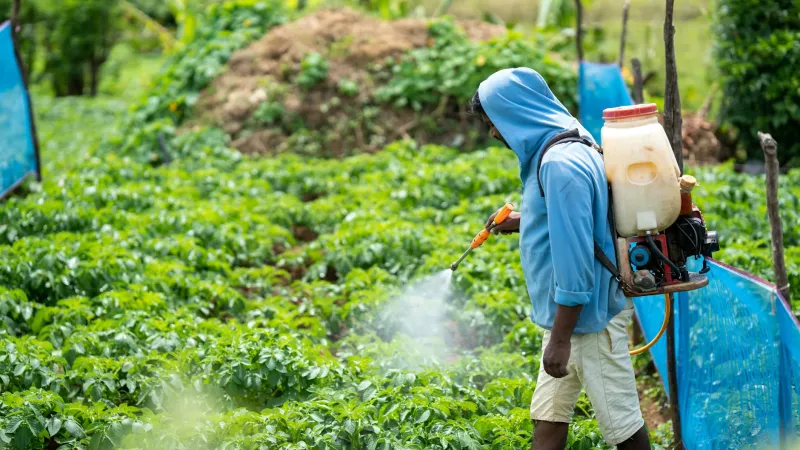
Walk down any grocery aisle and you'll see it everywhere: "organic," "natural," "chemical-free." For most Americans, these words trigger the same mental image — food grown without any pesticides, herbicides, or synthetic chemicals touching the crops. It's a comforting thought that's driven the organic food industry to $50 billion in annual sales.
There's just one problem: it's not true.
What Organic Actually Means
The USDA's National Organic Program, established in 2002, doesn't prohibit pesticides. It prohibits synthetic pesticides while maintaining an approved list of "natural" ones. That list currently includes over 40 different substances that organic farmers can spray on crops — from copper sulfate and pyrethrin to rotenone and spinosad.
Some of these approved organic pesticides are applied in significantly higher quantities than their synthetic counterparts. Copper-based fungicides, for instance, persist in soil far longer than many synthetic alternatives and can be toxic to beneficial insects and aquatic life. Rotenone, derived from tropical plants, is so potent that it's used in research laboratories to induce Parkinson's-like symptoms in lab animals.
The distinction isn't safety — it's source. If a pesticide can be extracted from a plant, mineral, or animal, it's potentially eligible for organic certification. If it's synthesized in a lab, even if it's chemically identical to the natural version, it's banned.
The Marketing Sleight of Hand
How did "organic" become synonymous with "pesticide-free" in the American mind? The answer lies in decades of careful marketing that exploited a fundamental misunderstanding about chemistry.
The organic food movement began in the 1960s as a reaction to industrial agriculture's heavy use of synthetic pesticides like DDT. Early organic advocates genuinely believed that anything "natural" was inherently safer than anything "artificial." This philosophy made intuitive sense to consumers who were increasingly skeptical of chemical companies and industrial food production.
Marketing departments seized on this intuition. Organic food packaging began featuring images of pristine farms, happy families, and explicit or implied promises of purity. The word "chemical" became marketing poison, despite the fact that everything — including water, vitamins, and the human body itself — is made of chemicals.
Why Natural Doesn't Mean Safer
The assumption that natural pesticides are automatically safer than synthetic ones falls apart under scientific scrutiny. Nicotine, mercury, and cyanide are all natural. Aspirin, insulin, and many life-saving medications are synthetic.
Toxicity depends on the specific compound, dosage, and exposure method — not whether it came from a plant or a laboratory. Some organic-approved pesticides require higher application rates than synthetic alternatives to achieve the same pest control, potentially increasing environmental impact.
Pyrethrin, derived from chrysanthemum flowers, is approved for organic use but highly toxic to bees and fish. Meanwhile, some synthetic pesticides break down more quickly in the environment and require smaller application volumes.
The Regulatory Reality Check
USDA organic certification is actually quite rigorous — just not in the way most consumers imagine. Organic farmers must maintain detailed records, submit to regular inspections, and follow strict protocols for pest management, soil health, and crop rotation.
The regulations prioritize ecological farming practices over zero-chemical agriculture. Organic farmers are required to try non-chemical pest management first — crop rotation, beneficial insects, physical barriers — before turning to approved pesticides. When they do use pesticides, they must choose the least harmful option and apply it in ways that minimize environmental impact.
This approach often produces food with lower overall pesticide residues than conventional farming, but it doesn't produce pesticide-free food.
The Persistence of the Myth
Why does the "chemical-free" myth persist despite clear labeling regulations that never actually promise zero pesticides? Several factors keep this misconception alive:
First, the organic industry has little incentive to correct it. "Grown with different pesticides" is a much harder sell than "natural and pure."
Second, the complexity of agricultural chemistry makes it difficult for consumers to understand the nuances. It's easier to believe in a simple "good vs. bad" narrative than to evaluate the relative risks and benefits of specific compounds.
Third, many consumers have developed an emotional attachment to the idea of pure, untouched food that connects them to an idealized agricultural past that never really existed.
What This Actually Means for Your Grocery Cart
This doesn't mean organic food is a scam or that you should avoid it. Organic farming practices often do result in lower pesticide residues, better soil health, and reduced environmental impact compared to conventional agriculture. Many people choose organic for valid reasons beyond pesticide concerns — supporting smaller farms, animal welfare standards, or environmental sustainability.
The issue isn't with organic food itself — it's with the impossible promise of chemical-free agriculture. Understanding what organic certification actually guarantees (and what it doesn't) helps you make informed decisions based on your actual priorities rather than marketing mythology.
Next time you see "natural" or "organic" on a label, remember: it's telling you something about how the food was produced, not promising you escaped chemistry entirely. In agriculture, as in life, the real story is always more complicated than the marketing suggests.