The Hand Washing Ritual Everyone Learned Is Missing the Most Important Parts
The Universal Hand Washing Performance
Walk into any public restroom and you'll witness the same ritual playing out dozens of times: a brief encounter with soap, a quick rinse under lukewarm water, maybe ten seconds total before heading to the paper towel dispenser. Most people perform this routine with the confidence of someone who's mastered an essential life skill.
There's just one problem: what nearly everyone thinks of as proper hand washing barely qualifies as effective cleaning.
What We Think We Know About Clean Hands
The conventional wisdom seems straightforward enough. Soap kills germs, water rinses them away, and as long as you hit both steps, you're golden. Many people have absorbed the "20-second rule" from various public health campaigns, but even those who've heard it often treat it as a suggestion rather than a minimum requirement.
The reality is far more specific. Effective hand washing isn't just about soap and water—it's about mechanical action, contact time, and understanding what you're actually trying to accomplish.
The Science Behind Actually Clean Hands
Soap doesn't kill most germs the way people imagine it does. Instead, it works by breaking down the oils and proteins that help pathogens stick to your skin. But this process takes time and friction to work properly.
Research from public health laboratories shows that the mechanical scrubbing action—the physical rubbing of hands together—is actually more important than the soap itself for removing many types of harmful bacteria and viruses. The soap makes this process more effective, but without adequate scrubbing time, you're essentially just getting your hands wet.
The 20-second minimum isn't arbitrary. Studies tracking pathogen removal find that most harmful microorganisms require at least 15-20 seconds of active scrubbing to dislodge from skin surfaces. Anything shorter leaves behind significant numbers of potentially dangerous microbes.
The Temperature Myth That Won't Die
One of the most persistent misconceptions involves water temperature. Many people believe hot water is essential for killing germs, leading to scalding encounters with faucets set to uncomfortable temperatures.
The truth is more practical: water temperature has virtually no impact on pathogen removal during normal hand washing. The brief contact time isn't nearly long enough for heat to have any antimicrobial effect. Comfortably warm water actually works better because people are more likely to wash thoroughly when they're not trying to avoid burning their hands.
Why the Simple Message Created Complex Problems
Public health officials faced a classic communication challenge: how do you teach proper hand hygiene to millions of people without turning it into a medical procedure? The solution was to simplify the message down to its most basic elements: soap, water, done.
This approach succeeded in making hand washing seem achievable and routine. But it also created a false sense of security. People learned to go through the motions without understanding what actually makes the process effective.
The oversimplification became particularly problematic during health crises. When hand washing suddenly became a critical defense against disease transmission, many people discovered their lifelong routine was inadequate—but didn't know how to fix it.
What Actually Works (And What Doesn't Matter)
Effective hand washing has three non-negotiable components: adequate soap, sufficient time, and thorough mechanical action. Everything else is largely irrelevant.
The soap doesn't need to be antibacterial—regular soap works just as well for removing pathogens. The water doesn't need to be hot—lukewarm is actually preferable. Fancy dispensers and premium products don't add meaningful benefits.
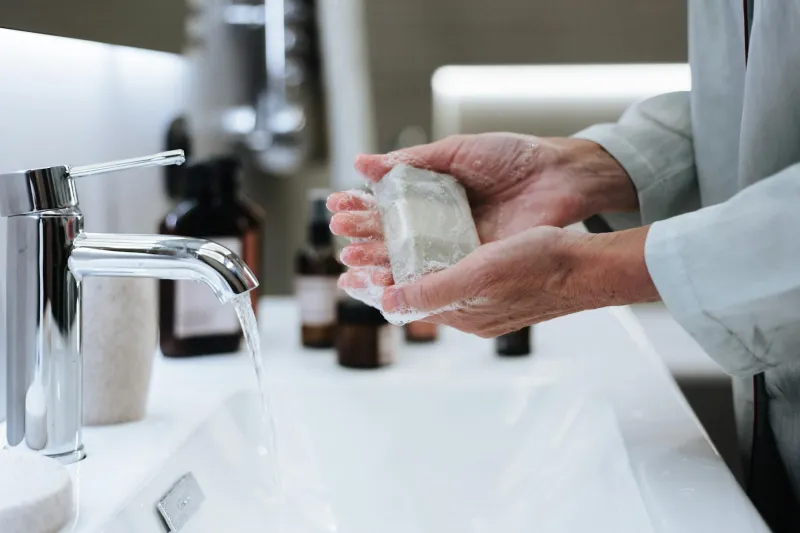
What does matter is covering all surfaces of both hands, including between fingers, under nails, and around wrists. The scrubbing should be vigorous enough to work up a good lather, and it needs to continue for the full 20 seconds, not just until the soap appears.
The Drying Detail Everyone Forgets
Even people who master the washing technique often fumble the final step. Proper drying isn't just about comfort—wet hands transfer pathogens more easily than dry ones.
Paper towels are more effective than air dryers for removing remaining microorganisms. But the technique matters here too: patting hands dry works better than aggressive rubbing, which can actually redistribute bacteria across skin surfaces.
Making It Actually Stick
The gap between knowing proper technique and practicing it consistently comes down to habit formation. Most people learned their hand washing routine in childhood and have repeated it thousands of times since. Changing such an ingrained behavior requires conscious effort and practice.
The good news is that once proper technique becomes automatic, it doesn't take significantly more time or effort than the ineffective version most people currently use. It just requires understanding what you're actually trying to accomplish and why each step matters.
The Real Takeaway
Hand washing isn't complicated, but it is specific. The difference between going through the motions and actually removing harmful pathogens comes down to time, technique, and understanding the science behind what makes it work. Those extra ten seconds of proper scrubbing aren't just being thorough—they're often the difference between clean hands and hands that just look clean.