The Sugar Rush That Never Was: Why Parents Keep Seeing What Science Says Isn't There
The Sugar Rush That Never Was: Why Parents Keep Seeing What Science Says Isn't There
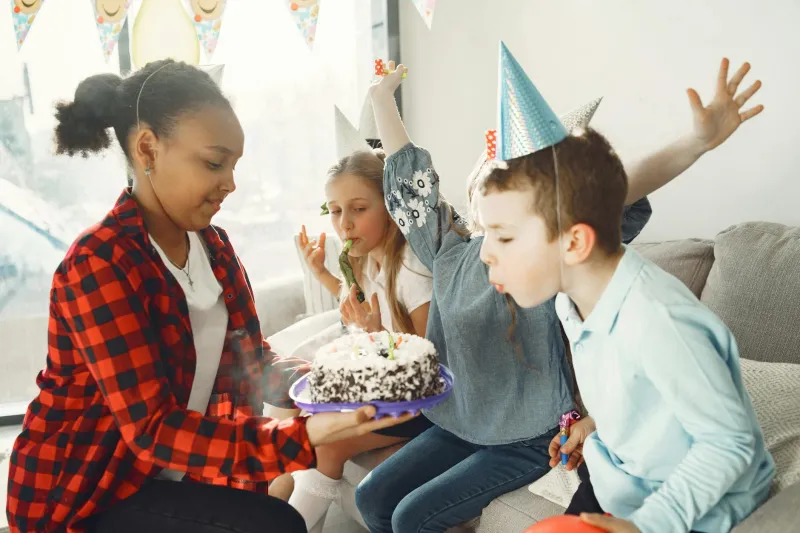
It's birthday party season, and you know what that means: cake, ice cream, and the inevitable parental warnings about "sugar highs." Watch any group of parents at a kid's party and you'll hear the same refrain: "Don't let them have too much cake or they'll be bouncing off the walls."
This belief is so universal that questioning it feels almost heretical. But here's the thing: science has been quietly dismantling the sugar-hyperactivity connection for decades, and the results are pretty clear. Sugar doesn't make kids hyper. Not even close.
What the Research Actually Shows
The scientific community has put the sugar-hyperactivity myth through the wringer with some of the most rigorous testing imaginable. We're talking double-blind, placebo-controlled studies – the gold standard of research where neither parents nor kids know who's getting sugar and who's getting artificial sweeteners.
One landmark study published in the New England Journal of Medicine looked at 23 previous studies involving nearly 400 children. The researchers examined every angle: different types of sugar, different amounts, kids with ADHD, kids without ADHD, and various measures of hyperactivity. The conclusion was unambiguous: sugar consumption had no effect on children's behavior or cognitive performance.
But the researchers didn't stop there. They conducted their own controlled experiment, giving some kids sugar and others aspartame (an artificial sweetener), while carefully monitoring behavior, attention, and activity levels. Again, no difference.
This wasn't a one-off finding. Study after study has reached the same conclusion. In controlled environments where expectations are removed from the equation, sugar simply doesn't produce the hyperactive behavior that parents are so certain they observe.
The Birthday Party Effect
So if sugar isn't causing the chaos, what is? The answer lies in understanding what's actually happening at those birthday parties, Halloween nights, and holiday gatherings where parents most often observe the "sugar rush."
Think about the typical sugar-consumption scenario: It's usually a special occasion. There are other kids around. The environment is stimulating. Rules are relaxed. Bedtimes might be pushed back. Kids are excited about the event itself – not just the treats.
Researchers call this the "birthday party effect." When you strip away the party atmosphere and test sugar consumption in a controlled, boring laboratory setting, the hyperactivity disappears. It turns out that excitement, social stimulation, and disrupted routines are much better predictors of energetic behavior than blood glucose levels.
The Power of Parental Expectation
Here's where things get really interesting. In studies where parents were told their children had consumed sugar (but actually hadn't), those parents rated their kids as significantly more hyperactive than parents who thought their children had consumed a placebo.
This isn't about parents being bad observers – it's about how powerful our expectations can be. When you're primed to look for hyperactive behavior, you're more likely to notice and remember instances of high energy while overlooking calm moments. Psychologists call this confirmation bias, and it's incredibly strong when it comes to beliefs about our children.
How Did We Get Here?
The sugar-hyperactivity myth gained traction in the 1970s, thanks largely to Dr. Benjamin Feingold, a pediatric allergist who proposed that artificial additives and sugar were causing behavioral problems in children. His theory resonated with parents who were looking for explanations for their kids' difficult behavior, and the idea quickly spread through parenting communities.
The timing was perfect. The 1970s saw increasing concern about processed foods and artificial ingredients, and Feingold's theory tapped into broader anxieties about what we were feeding our children. The fact that it seemed to offer both an explanation and a solution – just remove sugar and additives – made it incredibly appealing.
Media coverage amplified the message, often presenting Feingold's hypothesis as established fact rather than an unproven theory. By the time rigorous scientific studies began debunking the connection in the 1980s and 1990s, the belief was already deeply embedded in parenting culture.
Why the Myth Persists
Despite decades of contrary evidence, the sugar-hyperactivity belief remains remarkably resilient. Part of this is due to the powerful combination of personal experience ("I've seen it with my own eyes") and social reinforcement ("every other parent believes it too").
There's also the fact that the myth feels intuitively true. Sugar provides quick energy, so it makes sense that it would make kids more energetic, right? This logical-sounding explanation helps the belief persist even in the face of contradictory evidence.
Plus, there's little downside to believing it. Limiting kids' sugar intake isn't harmful – it's actually beneficial for dental health and nutrition. So even if the hyperactivity connection is false, parents don't feel like they're missing out by maintaining the belief.
The Real Takeaway
This isn't to say that sugar is harmless or that parents should throw caution to the wind at birthday parties. Sugar absolutely contributes to tooth decay, provides empty calories, and can displace more nutritious foods in children's diets. These are legitimate reasons to moderate sugar intake.
But if you're limiting sugar specifically to prevent hyperactivity, you might want to reconsider your strategy. Instead of focusing on the cake, pay attention to the environment, the schedule, and the level of stimulation. A tired kid at an exciting party is going to be wound up regardless of what they eat.
The sugar-hyperactivity myth is a perfect example of how compelling personal experience can be, even when it's not telling us what we think it is. Sometimes the most obvious explanation isn't the right one – and that's exactly the kind of thing that makes science so valuable in the first place.