The 10% Brain Myth Won't Die Because It's Selling You Something You Want to Believe
The Myth That Launched a Thousand Self-Help Books
Somewhere between elementary school and your first job interview, you probably heard it: humans only use 10 percent of their brains. Maybe it was a teacher trying to motivate you to study harder, or a motivational speaker promising to unlock your hidden potential. The exact source doesn't matter because the message was always the same — imagine what you could accomplish if you could just access that other 90 percent.
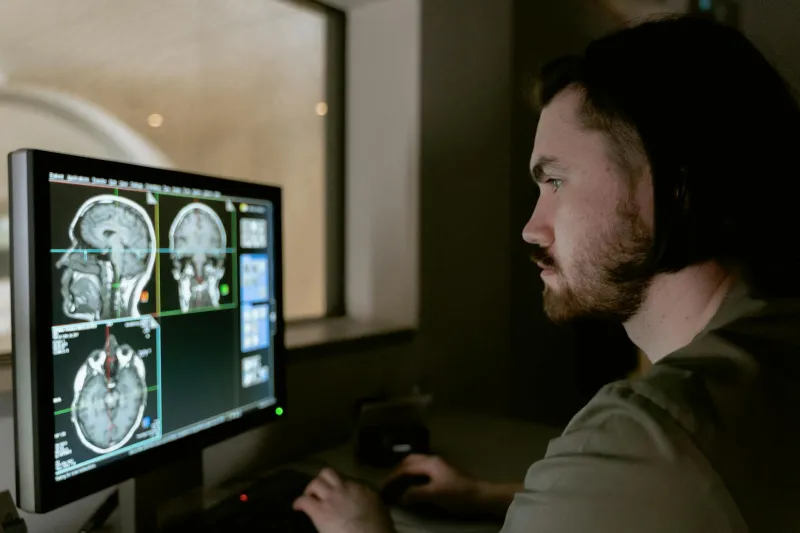
Here's the thing: modern neuroscience has thoroughly debunked this claim. Brain imaging technology can show us exactly which parts of the brain are active at any given moment, and the answer is pretty much all of it. Even during sleep, far more than 10 percent of your brain is working.
Yet the myth refuses to die. It's been the foundation of countless self-help books, the premise of Hollywood movies, and the hook for expensive training programs. Understanding why such a demonstrably false idea maintains its grip tells us something important about how we process information about ourselves.
Where This Nonsense Probably Started
Tracing the exact origin of the 10 percent claim is like trying to find the first person who said "it's not you, it's me" — it's been around so long that the source has become mythical itself. But researchers have identified several likely contributors.
In the early 1900s, psychologist William James wrote that most people only achieve a fraction of their potential, though he never mentioned a specific percentage. Around the same time, neuroscientists were discovering that large portions of the brain didn't seem to have obvious functions when stimulated during surgery. These "silent areas" were simply regions science hadn't figured out yet, but they got labeled as unused.
The most probable culprit is a misinterpretation of early brain lesion studies. Researchers found that damage to certain brain areas didn't always produce obvious behavioral changes, leading some to conclude these areas were unnecessary. We now know these regions handle complex functions that aren't immediately apparent, but the idea of "unused" brain real estate had already taken root.
What Brain Scans Actually Show
Modern brain imaging technology — PET scans, fMRI, and other techniques — can track blood flow and electrical activity throughout the brain in real time. What they reveal is the opposite of the 10 percent myth.
Even simple tasks like reading this sentence activate multiple brain regions simultaneously. Visual processing, language comprehension, memory retrieval, and attention systems all fire together. During complex activities, the brain lights up like a Christmas tree.
Even when you're doing "nothing" — just sitting quietly — your brain is incredibly active. The default mode network, a system of brain regions active during rest, consumes about 20 percent of your body's total energy despite the brain being only 2 percent of your body weight.
Dr. Barry Gordon, a neurologist at Johns Hopkins, puts it bluntly: "We use virtually every part of the brain, and most of the brain is active almost all the time."
The Self-Help Industrial Complex Needs You to Believe
If the science is so clear, why does the 10 percent myth persist? The answer lies in what the myth promises: unlimited potential just waiting to be unlocked.
The self-improvement industry, worth billions of dollars annually, relies on the idea that you're currently operating far below your capabilities. If you were already using your full potential, what would be left to improve? The 10 percent myth provides the perfect foundation for this narrative.
Books with titles like "Unlock Your Brain's Hidden Power" and "Access Your Unlimited Potential" wouldn't make sense if people believed they were already using their full cognitive capacity. The myth creates a problem that the industry can then sell solutions for.
This isn't necessarily malicious — many self-help authors genuinely believe they're helping people. But the economic incentives are clear: a myth that makes people feel like they have vast untapped potential is much more marketable than the truth about human cognitive limitations.
Why Smart People Keep Falling for It
The 10 percent myth persists not because people are gullible, but because it satisfies several psychological needs simultaneously.
First, it offers hope without requiring immediate action. You don't need to fundamentally change your life or work harder — you just need to "unlock" what's already there. It's the cognitive equivalent of believing you have a trust fund you haven't accessed yet.
Second, it provides a flattering explanation for current limitations. If you're not performing as well as you'd like, it's not because of lack of talent or effort — it's because you haven't activated your dormant brain power.
Third, the myth feels intuitively plausible. Most people are aware they sometimes operate on autopilot or fail to notice things around them. This creates a subjective sense that much of our mental capacity goes unused, even though that's not how brains actually work.
The Real Story Is Actually More Interesting
The truth about human brains is more fascinating than the myth. You are using virtually all of your brain, but not all at once for the same purpose. Your brain is like a symphony orchestra — different sections play different parts, and the magic happens through coordination, not by getting every instrument to play the same note simultaneously.
The brain's real limitation isn't that most of it sits idle, but that it has to make constant tradeoffs. Focusing intently on one task means other systems get less attention. The brain that's fully engaged in solving a math problem is less aware of background conversations or physical discomfort.
Improvement comes not from accessing unused brain areas, but from better coordination between areas, more efficient neural pathways, and strategic allocation of limited cognitive resources.
What This Says About How We Want to Grow
The persistence of the 10 percent myth reveals something important about human psychology: we prefer explanations that suggest our limitations are temporary and artificial rather than fundamental and biological.
This isn't entirely wrong — humans can improve, learn new skills, and increase their capabilities. But real improvement requires understanding actual constraints and working within them, not believing in magical untapped reserves.
The most effective approaches to personal development acknowledge that cognitive resources are limited and focus on using them more strategically. This might be less inspiring than believing in unlimited potential, but it's more likely to produce actual results.
The Myth That Reveals the Truth
The 10 percent brain myth tells us less about neuroscience than it does about human nature. We want to believe in hidden potential, quick fixes, and dramatic transformations. We're drawn to explanations that suggest our current limitations are temporary inconveniences rather than permanent features.
Recognizing why we find certain myths appealing can be the first step toward more realistic and ultimately more effective approaches to improvement. Your brain isn't holding back 90 percent of its power — but understanding how it actually works might help you use it more wisely.