One Scientist Spent Decades Trying to Kill His Own Idea — The Alpha Wolf Myth Refused to Die
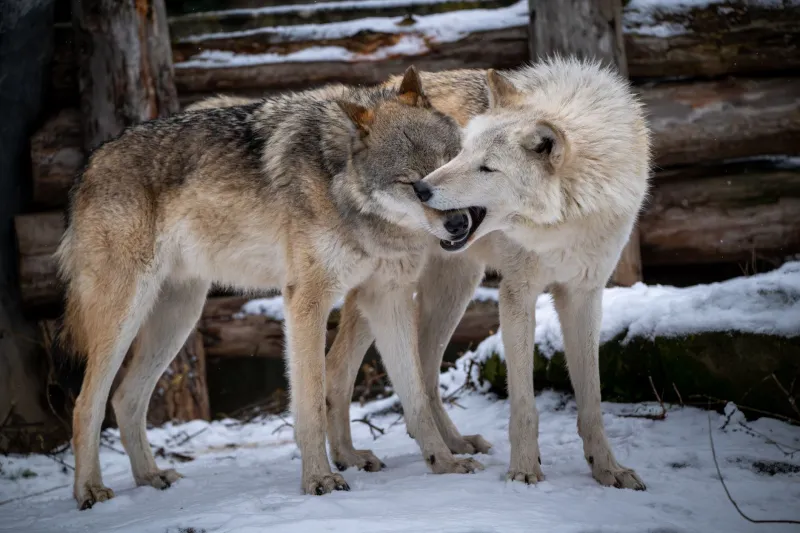
If you've ever sat through a leadership seminar, scrolled through a certain corner of the internet, or picked up a self-help book with a wolf on the cover, you've encountered the alpha. The dominant one. The pack leader. The animal — or person — who claws to the top and rules through strength and authority.
It's a compelling story. It's also built almost entirely on research that the scientist who conducted it has spent decades trying to retract.
Where the Alpha Came From
In 1970, a wildlife biologist named L. David Mech published a book called The Wolf: Ecology and Behavior of an Endangered Species. In it, he described wolf packs organized around dominant "alpha" males and females who controlled subordinate pack members through aggression and competition. The book was widely read, widely cited, and — here's the part that matters — based on observations of captive wolves held together in an enclosed wildlife preserve in Switzerland.
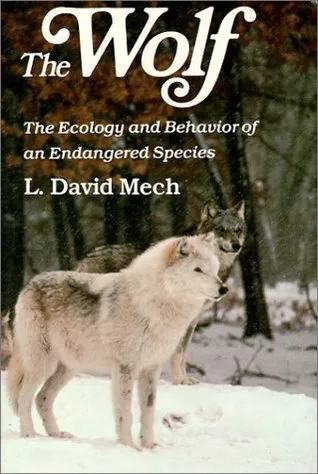 Photo: L. David Mech, via images-na.ssl-images-amazon.com
Those wolves hadn't chosen each other. They were unrelated animals forced into close quarters, competing for resources in conditions that had nothing to do with how wolves actually live in the wild. The social dynamics Mech observed were, in a very real sense, an artifact of captivity — not a window into natural wolf behavior.
Mech figured this out. And he said so, loudly, for a very long time.
The Correction Nobody Wanted to Hear
By the late 1990s, Mech had spent years studying wild wolf packs in their natural habitat — specifically in Yellowstone and in the Canadian Arctic. What he found looked almost nothing like the captive model. Wild wolf packs, it turned out, are almost always family units. A breeding pair and their offspring. The so-called "alpha" male and female are simply the parents. They lead not because they fought their way to dominance, but because they're the ones who started the family.
 Photo: Canadian Arctic, via www.intrepidtravel.com
In 1999, Mech published a paper in the Canadian Journal of Zoology explicitly arguing that the term "alpha wolf" should be abandoned. He has since written and spoken publicly about this correction repeatedly. He contacted his original publisher and asked them to stop printing the 1970 book. They declined — it was still selling.
As of the mid-2020s, that original book remains in print.
How a Retracted Idea Became a Cultural Franchise
Here's where things get interesting from a cultural standpoint. Mech's correction arrived at exactly the wrong moment to actually correct anything. By the 1990s and 2000s, the alpha concept had already migrated far beyond wildlife biology. It had colonized management consulting, pickup artist communities, men's fitness culture, dog training manuals, and a sprawling self-help industry that found the alpha framework almost too useful to abandon.
The idea that human social hierarchies mirror wolf pack dynamics — that there are natural leaders and natural followers, that dominance is earned through assertiveness, that deference signals weakness — had become a foundational story for entire subcultures. Books, podcasts, YouTube channels, and coaching programs were built on top of it.
None of that infrastructure had any particular incentive to update its source material.
Dog training was one of the most concrete casualties. The idea that owners need to "establish dominance" over their dogs to prevent behavioral problems — still taught in some training circles today — is a direct descendant of the captive wolf research. The American Veterinary Society of Animal Behavior has formally opposed dominance-based training methods, noting that they're based on outdated science and can increase aggression in dogs. But walk into a pet store and you can still find training books built on the old model.
Why the Myth Keeps Winning
There's a straightforward psychological reason this particular misconception is so durable: it tells people something they want to believe. The alpha framework is a story about the world having a natural order, about certain traits reliably leading to success, about competition producing clear winners. That's a satisfying narrative. It gives people a framework — however fictional — for understanding social dynamics and personal ambition.
The actual science is messier and less marketable. Wild wolves cooperate. They raise young together. The "leaders" of the pack are leaders primarily because they're parents. That's a lovely finding for wildlife biology, but it doesn't translate cleanly into a men's fitness program or a corporate leadership retreat.
Mech himself has noted the frustration of watching his correction fail to travel at anything like the speed his original error did. The 1970 book had a forty-year head start. The correction arrived after the idea had already been absorbed into popular culture as established fact.
The Takeaway
The alpha wolf isn't a discovery. It's an artifact — a conclusion drawn from captive animals in artificial conditions, mistakenly applied to wild animals, and then mistakenly applied to human beings. The scientist who made the original observation identified the error, published the correction, and asked for the original work to be pulled from circulation.
None of that happened fast enough to matter.
The next time someone invokes "alpha" behavior as a model for leadership, confidence, or social dynamics, it's worth knowing: the wolves they're picturing were in a cage. And the biologist who put them there has been trying to tell us that for thirty years.