Your Doctor's Waiting Room Isn't Neutral — It's Quietly Making You Feel Worse
Your Doctor's Waiting Room Isn't Neutral — It's Quietly Making You Feel Worse
You know the room. Fluorescent lights humming at a frequency that seems specifically calibrated to be annoying. Chairs bolted together in rows that force you to sit at an uncomfortable angle next to a stranger. A television mounted in the corner playing cable news at a volume nobody asked for. A stack of magazines from eighteen months ago. A front desk where someone occasionally disappears through a door and doesn't come back.
Most people experience this as an inconvenience. What the research suggests is that it's something closer to an active health hazard.
The Room Before the Room
The medical waiting room has been, for most of its existence, treated as a logistical afterthought. It's the space between arrival and care — the holding area. Hospital administrators have historically focused resources on the clinical spaces: operating rooms, exam rooms, diagnostic equipment. The waiting room was where you put chairs.
But a growing body of research in environmental psychology and healthcare design has spent the last few decades making a fairly uncomfortable argument: the design of waiting spaces directly affects patient outcomes. Not just comfort. Actual outcomes.
Anxiety levels measured before and after waiting periods. Pain perception scores that shift based on environmental factors. Patient compliance with follow-up care that correlates with how the initial visit felt. The waiting room, it turns out, is doing a lot of work — and most of it is working against you.
What the Research Actually Shows
Let's start with lighting, because it's one of the most studied variables. Fluorescent overhead lighting — the standard in the vast majority of American medical waiting rooms — has been consistently associated with elevated stress responses and increased reports of headache and eye strain. Natural light or warm-spectrum artificial light produces measurably lower cortisol levels in patients waiting for procedures. Some studies have found that access to a window with a natural view reduced patients' reported pain levels and decreased requests for pain medication post-procedure.
Seating arrangements matter in ways that feel almost too simple to be true. Chairs arranged in rows facing forward — the airport or DMV configuration — reduce the likelihood that patients will engage in social interaction with others in the room. That might sound like a neutral outcome, but social connection is a documented anxiety buffer. Seating arranged in small clusters, or in L-shapes that allow for easy conversation without forced proximity, has been shown to lower self-reported anxiety in waiting patients.
Noise is a particularly underappreciated factor. The television mounted in the corner of virtually every American waiting room was installed with the assumption that distraction reduces anxiety. The evidence on this is more complicated. Uncontrolled noise — including television audio that patients didn't choose and can't adjust — actually increases physiological stress markers. The distraction effect requires some degree of voluntary engagement. Passive exposure to noise you can't control is just noise.
And then there's the issue that may matter most: uncertainty about wait time.
The Cruelty of Not Knowing
Researchers who study waiting behavior — and yes, this is a legitimate field — have identified something called the "uncertain wait" as one of the most potent drivers of perceived wait discomfort. It's not just that waiting is unpleasant. It's that waiting without knowing how long you'll wait is dramatically more unpleasant than waiting the same amount of time with accurate information.
In one frequently cited study, participants who were told they'd wait twenty minutes and then waited twenty minutes reported significantly lower frustration than participants who were told "it shouldn't be too long" and then waited fifteen minutes. The shorter actual wait produced more distress, because the uncertainty itself was the stressor.
American medical offices have been famously resistant to giving patients realistic wait-time information. The reasons are partly logistical — appointment schedules are genuinely unpredictable — but partly cultural. There's a long-standing assumption in medical settings that patients will simply wait, and that managing their experience of waiting isn't really the clinic's responsibility.
What Facilities That Take This Seriously Look Like
A handful of hospital systems and outpatient clinics have started treating waiting room design as a clinical variable rather than an interior design question. The changes tend to look obvious in retrospect.
Natural light wherever possible, or warm-spectrum LED lighting designed to mimic it. Seating in varied configurations that give patients choices about proximity to others. Noise levels actively managed — some facilities have eliminated waiting room televisions entirely and replaced them with nature soundscapes or simple quiet. Real-time digital displays showing approximate wait times, updated regularly. Access to natural views, plants, or artwork featuring natural scenes.
The Cleveland Clinic, which has invested heavily in what it calls "patient experience" research, has documented correlations between environmental improvements in waiting areas and patient satisfaction scores, compliance rates, and even some clinical outcomes. The Mayo Clinic has similarly built environmental design into its facility planning in ways that most regional hospitals haven't.
 Photo: Mayo Clinic, via logos-world.net
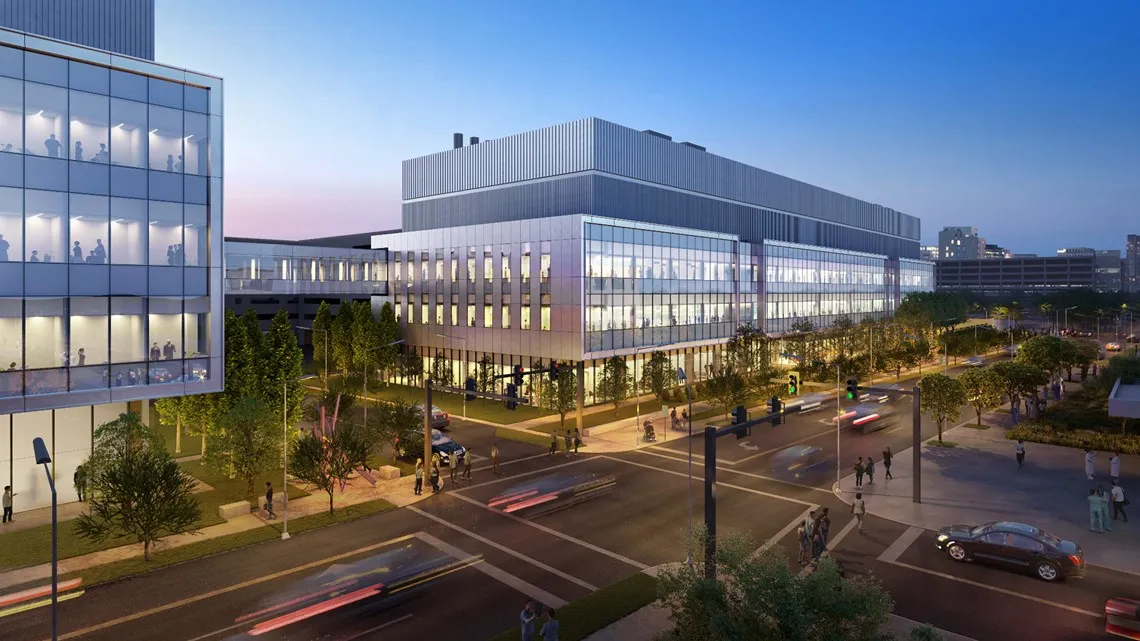 Photo: Cleveland Clinic, via media.wkyc.com
None of this is exotic or expensive in principle. Most of it is just attention.
The Takeaway
The waiting room isn't a neutral space where nothing is happening. It's an environment that's actively shaping how anxious you feel, how much discomfort you're experiencing, and how you'll remember the visit once it's over. The design choices that define most American medical waiting rooms — fluorescent light, bolted chairs, cable news, vague reassurances about wait time — weren't made because they're optimal. They were made because nobody thought it mattered.
The research suggests it matters quite a bit. The waiting room is part of the treatment. We just haven't been designing it that way.