You've Probably Seen a Mugshot of Someone Who Was Never Convicted of Anything
Photo: Tim Evanson, CC BY-SA 2.0, via Wikimedia Commons
There's a whole corner of the internet built around arrest photos. Mugshot aggregator sites pull booking images from county sheriff databases, organize them by name and location, and make them searchable. Local news outlets post them alongside crime blotter items. Social media accounts dedicate themselves entirely to sharing them. Millions of people browse this content every month without thinking much about what they're actually looking at.
Here's what they're actually looking at: a photograph taken at the moment someone was arrested. Not charged. Not convicted. Arrested.
In the American legal system, an arrest represents probable cause — a law enforcement officer's reasonable belief that a crime may have occurred. It is not a finding of guilt. It is not even a formal accusation yet. In many cases, it's the beginning of a process that ends with charges being dropped, cases being dismissed, or defendants being acquitted. And yet the photograph taken at that moment — the one that gets posted, searched, and shared — follows a person indefinitely.
How Booking Photos Became Public Property
The practice of photographing people at the time of arrest dates to the mid-1800s, when police departments in Europe and the United States began building visual records of individuals they suspected of criminal activity. The technology was new, the bureaucratic instinct was obvious: document everything.
What's less obvious is why those images became public records in the first place. The US has a deeply rooted tradition of open government — courts are public, trials are public, and most government documents are presumptively available for inspection. Booking photos got swept into that tradition largely by default. They're generated by a government agency (the police), stored in government databases, and therefore, under most state laws, available to anyone who asks.
For most of the twentieth century, that openness was mostly theoretical. You could technically request a booking photo, but doing so required going to a physical records office and filling out paperwork. The friction was enough that most people didn't bother unless they had a specific reason.
The internet eliminated that friction entirely. By the early 2000s, many sheriff's departments had begun posting booking photos directly to their own websites as a matter of transparency. Entrepreneurial developers noticed that these images were freely available, easy to scrape, and — it turned out — popular. Mugshot aggregator sites launched, grew quickly, and discovered a revenue model: charge the photographed person a fee to have their image removed.
That last part eventually attracted enough regulatory attention that some states passed laws banning removal fees. But the underlying practice — collecting and publishing arrest photos of people who haven't been convicted of anything — remained largely intact.
What Other Countries Do Differently
The United States is genuinely unusual in this regard. In the United Kingdom, Canada, most of Western Europe, and Australia, booking photos are treated as sensitive personal information. They're maintained as internal law enforcement records and are not routinely released to the public or the press. Publishing an arrest photo before a conviction can actually expose a news outlet to legal liability in some jurisdictions.
 Photo: Western Europe, via celebritate.com
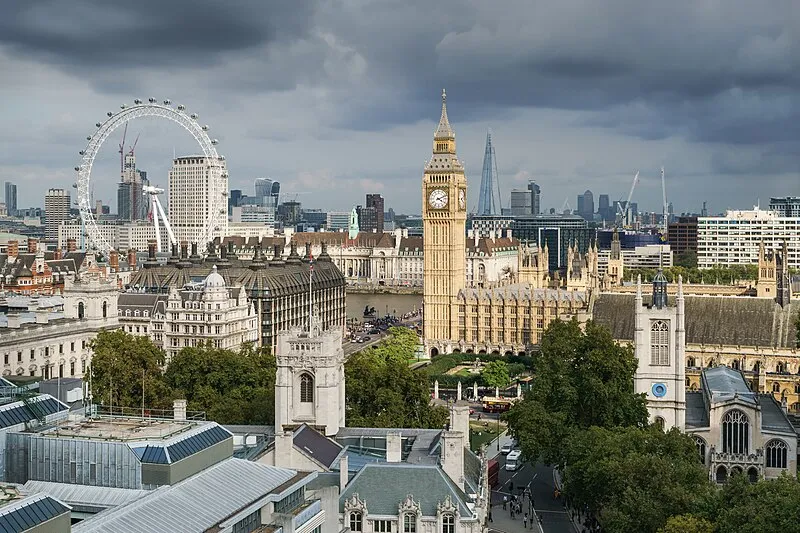 Photo of United Kingdom, via Wikidata/Wikimedia Commons
The reasoning is straightforward: if the legal system is built on a presumption of innocence, then broadcasting a person's arrest photo — before guilt has been established — works against that presumption. It tells the public this person was arrested in a way that most viewers interpret as this person did something wrong.
American legal tradition has generally landed on the other side of that tension, prioritizing government transparency and press freedom over the privacy interests of the arrested individual. That's a defensible value judgment. But it's worth being clear that it is a value judgment, not an obvious or universal conclusion.
The Cost Falls on People Whose Charges Disappear
Consider what happens in a common scenario: someone is arrested on a domestic disturbance call, their photo appears in the local paper and on a county sheriff's website, charges are filed, and then — a few weeks later — the charges are dropped. Maybe the evidence didn't support prosecution. Maybe the complaining witness declined to cooperate. Maybe the DA's office decided it wasn't worth pursuing.
The legal system has moved on. The person is, in the eyes of the law, exactly as innocent as they were before the arrest. But the photograph is still out there. It still appears in search results. It still shows up on mugshot sites. Future employers, landlords, dates, neighbors — anyone who Googles that person's name may find it.
Research on the downstream effects of arrest records (even without conviction) consistently shows significant impacts on employment prospects, housing applications, and professional licensing. A 2020 study from the University of Michigan found that even arrests that didn't result in conviction reduced callback rates in job applications by a measurable margin. The arrest photo is the most visible manifestation of a record that was supposed to mean nothing legally.
Why the Practice Persists
Part of the answer is structural. Changing public records law requires legislative action at the state level, and the people most harmed by the current system — those with arrest records — are not a particularly powerful political constituency. Meanwhile, the beneficiaries of easy access to booking photos include news organizations, which have First Amendment interests in government records, and a diffuse public that has come to expect this kind of information to be available.
Part of the answer is also psychological. Arrest photos look incriminating. The setting is institutional, the expression is usually stressed or blank, the framing is clinical. People process those visual cues quickly and draw conclusions before they've consciously thought about what an arrest actually means legally.
And part of it is simply habit. The mugshot as public entertainment is old enough in American culture that most people never stop to question whether it should work this way.
The Takeaway
The next time you see an arrest photo in the local news or on a county sheriff's website, the person in that image may be guilty of exactly what they're suspected of. Or they may be someone whose charges were dismissed six weeks after the photo was taken. The image itself doesn't tell you which. Most of the time, nothing in the headline does either — and the follow-up story, if charges are dropped, almost never gets the same reach as the original booking photo. That asymmetry is the real story.