The Truth Machine That Everyone Believes In — Except the Scientists Who Study It
The Machine That Reads Your Lies (Or Does It?)
In countless police procedurals and crime dramas, the polygraph test serves as the ultimate moment of truth. Suspects are hooked up to a mysterious machine that tracks their heartbeat, breathing, and sweating. The examiner asks pointed questions, studies the squiggly lines on paper, and declares with scientific authority: "You're lying."
It's compelling television. It's also mostly fiction.
The polygraph, commonly known as a lie detector, has been around for nearly a century. It's used by law enforcement agencies, government security clearances, and private investigators across the United States. But here's what Hollywood doesn't mention: the scientific community has never accepted polygraphs as reliable indicators of deception.
What Polygraphs Actually Measure
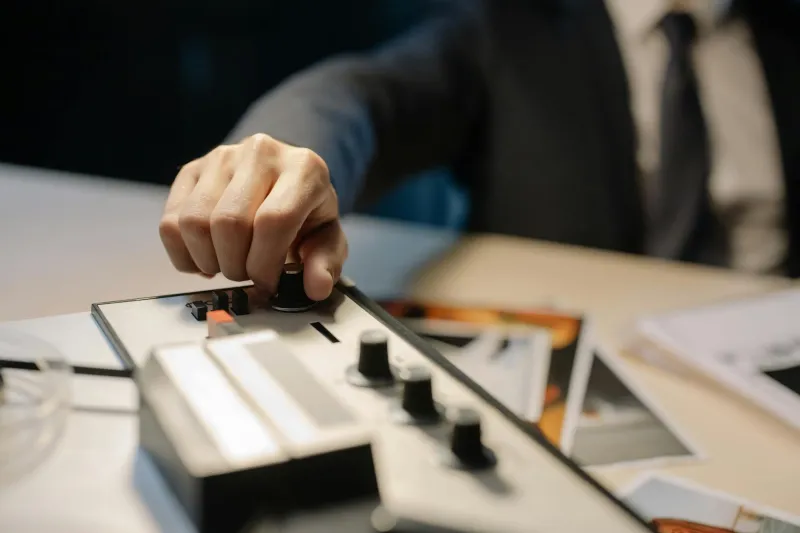
To understand why lie detectors don't actually detect lies, you need to know what they're really measuring. Modern polygraphs track several physiological responses: heart rate, blood pressure, breathing patterns, and skin conductivity (basically, how much you're sweating).
The theory behind polygraphs is straightforward: when people lie, they experience stress, and stress causes measurable changes in these bodily functions. Hook someone up to sensors, ask them some questions, and you should be able to spot deception by watching for physiological spikes.
The problem is that stress and deception aren't the same thing. Your heart rate might spike because you're nervous about being tested, because you're afraid of being falsely accused, because you had too much coffee that morning, or because you're genuinely angry about the situation. None of these responses indicate lying, but a polygraph can't tell the difference.
The Inconvenient Truth About Accuracy
Studies on polygraph accuracy vary widely, but even the most generous estimates put them at around 70-80% accurate — barely better than flipping a coin for some types of questions. The American Psychological Association has stated that "there is little basis for the expectation that a polygraph test could have extremely high accuracy."
 Photo: American Psychological Association, via upgradedpoints.com
More problematically, polygraphs produce a significant number of false positives — meaning they often indicate that truthful people are lying. This happens because the test fundamentally misunderstands human psychology. Some people naturally have stronger stress responses, while others (including some individuals with antisocial personality traits) may show little physiological reaction even when lying.
The National Academy of Sciences reviewed polygraph research in 2003 and concluded that the tests were too unreliable for security screening. Their report noted that polygraphs might catch some deceptive individuals, but would also falsely implicate many honest people.
 Photo: National Academy of Sciences, via virtualbackgrounds.site
Why Courts Don't Trust Them
Most U.S. courts have banned polygraph evidence for decades, and for good reason. The 1993 Supreme Court case Daubert v. Merrell Dow Pharmaceuticals established that scientific evidence must be based on reliable principles and methods. Polygraphs generally fail this test.
 Photo: Supreme Court, via www.avignon-et-provence.com
Currently, only New Mexico routinely allows polygraph evidence in court, and even then with significant restrictions. A few other states permit polygraph results if both sides agree, but this rarely happens because defense attorneys understand the tests' limitations.
Federal courts have been particularly skeptical. As one federal judge noted in a 1998 ruling, "The polygraph has not gained general acceptance in the scientific community, and this court finds that polygraph evidence is not sufficiently reliable to be admitted."
The Persistence of a Powerful Myth
If polygraphs are so unreliable, why do they remain popular? The answer reveals something fascinating about human psychology and institutional inertia.
First, polygraphs work as psychological tools even when they fail as scientific instruments. Many people believe lie detectors are accurate, so the mere threat of a polygraph test can prompt confessions. Law enforcement agencies sometimes use polygraphs less to detect lies than to pressure suspects into admitting guilt.
Second, confirmation bias plays a huge role. When a polygraph result confirms what investigators already suspect, it feels like validation. When it contradicts their theory, they're more likely to dismiss it as operator error or explain it away.
Third, popular culture has created a powerful mythology around lie detection. Movies and TV shows rarely mention polygraph limitations or false positives. Instead, they present a world where machines can peer into human souls and extract truth with scientific precision.
The Real-World Consequences
The belief in polygraph accuracy has real consequences beyond entertainment. Government agencies still use polygraphs for security clearances, potentially denying jobs to honest individuals who happen to have strong stress responses. Some law enforcement agencies continue to rely on polygraph results during investigations, potentially leading them away from actual perpetrators.
Perhaps most troubling, some innocent people have confessed to crimes they didn't commit after being told they "failed" a polygraph test. The psychological pressure of being told that a scientific instrument has detected your deception can be overwhelming, especially for vulnerable individuals.
The Bottom Line on Truth Detection
The polygraph's persistence says more about our desire for technological solutions to human problems than it does about the machine's actual capabilities. We want to believe that truth and lies can be measured as easily as temperature or blood pressure.
The reality is messier. Deception is complex, human physiology is variable, and stress responses are influenced by countless factors beyond honesty. No machine has yet been invented that can reliably peer into someone's mind and determine their truthfulness.
The next time you see a polygraph test in a movie or TV show, remember: the most unreliable thing about that scene might be the machine everyone trusts to reveal the truth.