Silicon Valley Keeps Telling the Dropout Story — But It Left Out Most of the Story

Photo: Yair Haklai, CC BY-SA 4.0, via Wikimedia Commons
At some point in the last two decades, "dropping out of college to start a company" went from being an unusual personal decision to something approaching a philosophy. You can find it celebrated in TED talks, startup accelerator pitches, and the kind of business books with a single bold word as the title.
The origin story is always roughly the same: brilliant young person enters prestigious university, realizes the institution can't keep up with their vision, leaves to build something that changes the world. Gates did it. Jobs did it. Zuckerberg did it. Clearly, the lesson is that college gets in the way of genius.
There's just one problem with that story. It's not wrong exactly — but it's missing so many pieces that the version most people have absorbed is almost the opposite of useful.
Let's Actually Look at the Famous Examples
Bill Gates dropped out of Harvard. That's true. What gets mentioned less often is that he was admitted to Harvard in the first place — which in the early 1970s, as today, was an extraordinarily selective institution. His family was wealthy and well-connected. His mother sat on the board of United Way alongside the CEO of IBM, a relationship that would later prove useful to Microsoft's early growth. Gates didn't drop out of community college with a vague idea. He left one of the world's elite universities after already demonstrating exceptional academic ability, with a family financial cushion that meant failure wouldn't be catastrophic.
Steve Jobs attended Reed College — a small, academically rigorous liberal arts school in Oregon. He dropped out after one semester but continued to audit classes, famously including a calligraphy course he later credited with influencing the typography of the original Macintosh. He also had the early support of a tight-knit community of engineers and tinkerers in the Bay Area, and a co-founder in Steve Wozniak whose technical skills were extraordinary.
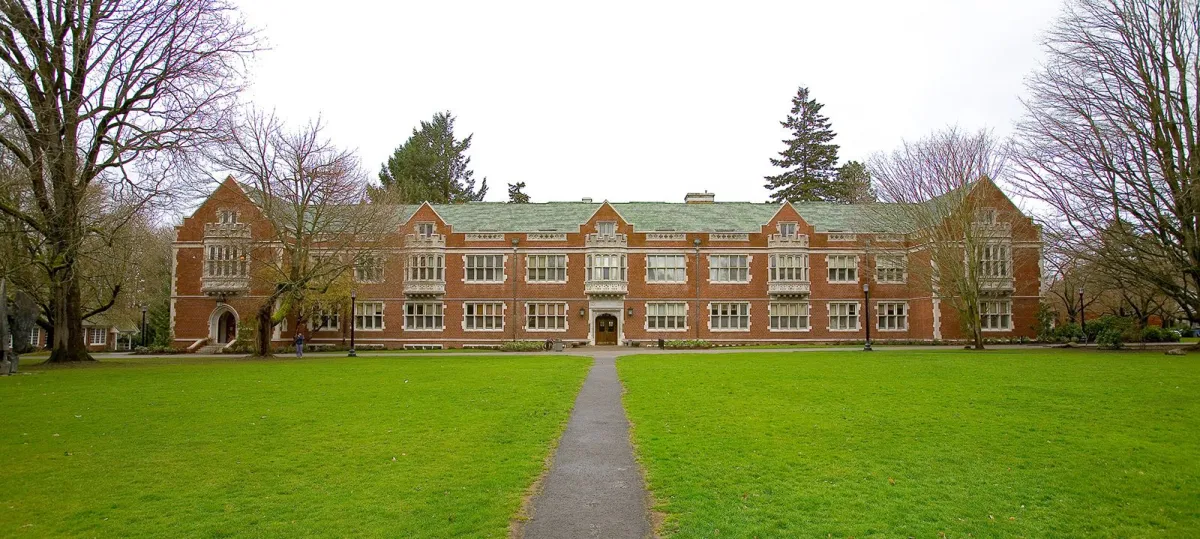 Photo: Reed College, via cdn.britannica.com
Mark Zuckerberg dropped out of Harvard — again, Harvard — after Facebook was already gaining significant traction and he had already received venture capital interest. He didn't leave to take a leap of faith. He left because the company was already working.
None of these are stories about college being irrelevant. They're stories about people with unusual access, unusual talent, and unusual circumstances making a specific decision at a specific moment. The dropout part is real. The context around it tends to get edited out.
The Survivorship Bias Problem
There's a well-known concept in statistics called survivorship bias. The idea is simple: we tend to study and celebrate the examples that succeeded, while ignoring the far larger population of examples that failed. The result is a distorted picture of what actually leads to success.
The dropout founder narrative is survivorship bias operating at a cultural scale.
For every Gates or Zuckerberg, there are thousands — probably tens of thousands — of people who left college to pursue a startup idea and ended up with neither the degree nor the company. We don't hear their stories because there's no billion-dollar outcome to build a narrative around. But they exist, and statistically they represent the overwhelming majority of outcomes for people who make that choice.
Research on entrepreneurship consistently finds that college graduates are more likely to start successful businesses than non-graduates, not less. A 2022 study from the National Bureau of Economic Research found that the most successful startup founders tend to be older, more educated, and more experienced in their industry than the "young genius dropout" archetype suggests. The median age of a founder at the time of their company's fastest growth period is closer to 45 than 25.
None of that makes for as compelling a magazine cover story.
How a Handful of Outliers Became a Business Philosophy
The dropout myth didn't spread by accident. It was actively promoted.
Peter Thiel — himself a Stanford Law graduate — created the Thiel Fellowship in 2011, which pays young people $100,000 to leave or forgo college and work on entrepreneurial projects. The program generated enormous press coverage and reinforced the idea that elite institutions were obstacles to innovation rather than pathways through it. It also, somewhat ironically, tends to select fellows who were already admitted to or attending highly selective universities — meaning the program is largely pulling from the same talent pool it claims to be liberating.
The venture capital world has its own incentives here. A narrative that frames young, unencumbered founders as ideal investment targets is commercially useful. It's easier to take a large ownership stake in a company founded by a 19-year-old with no industry experience than one founded by a 45-year-old who knows exactly what their equity is worth.
Media played a role too. "College student builds app in dorm room" is a more cinematic story than "experienced industry professional with graduate degree and 15 years of domain knowledge identifies market gap." One of those stories has a movie made about it. The other one is just most of what actually happens.
What the Story Is Actually Telling You
The dropout narrative isn't really about education. It's about a very specific type of person — exceptionally talented, financially cushioned, well-networked, often already admitted to elite institutions — making a high-stakes bet that happened to pay off under a unique set of circumstances.
Applying that story to your own life requires ignoring almost all of the variables that made it possible for those specific people. It's a little like watching someone win at blackjack after hitting on 18 and concluding that hitting on 18 is good strategy.
College isn't right for everyone, and there are plenty of legitimate reasons to question the cost and structure of higher education in America. But "Gates dropped out" is not one of those reasons. It's a story about an outlier that got told so many times it started to feel like a rule.
The real story is messier, more statistically honest, and considerably less cinematic. Which is probably why you don't hear it as often.