Fingerprint Matching Became Courtroom Gospel Before Anyone Actually Tested It
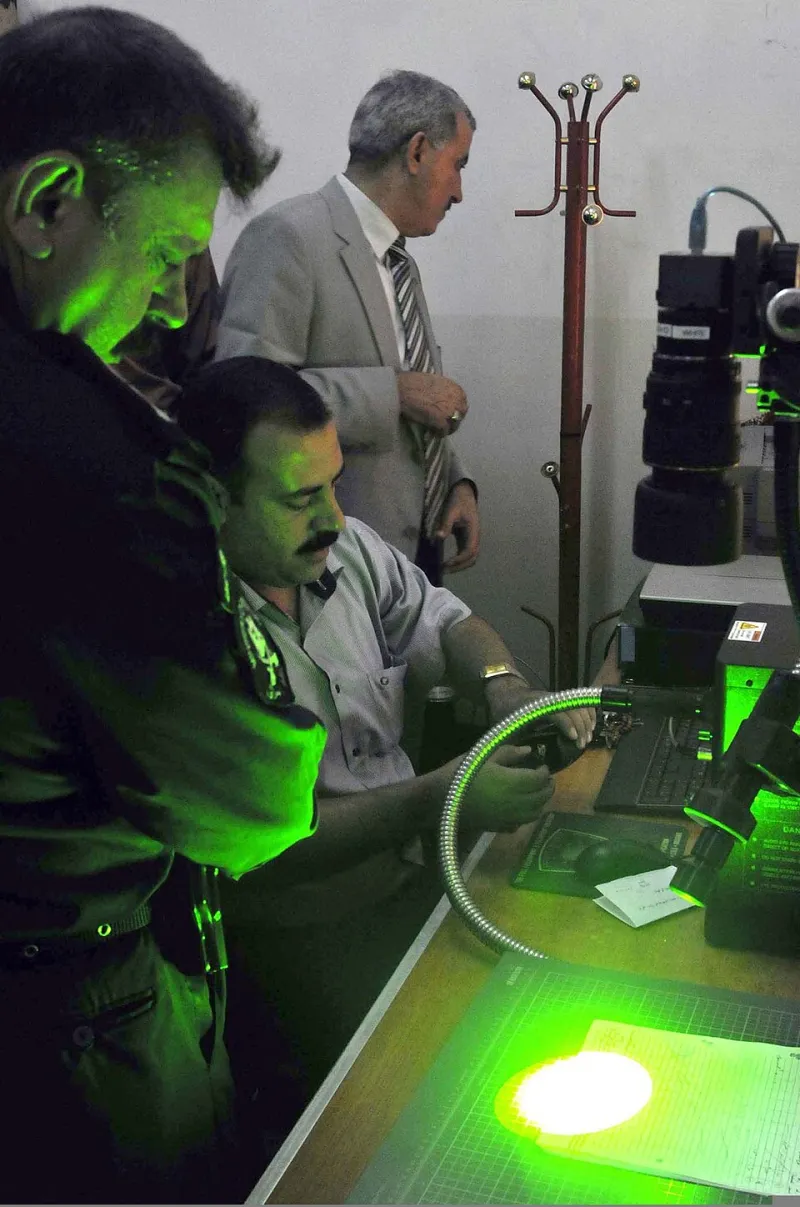
Photo: SGT David Strayer, Public domain, via Wikimedia Commons
If you've watched more than a few episodes of any crime procedural on American television, you've absorbed a very specific idea about fingerprints: they are unique to every person, they never change, and matching them is essentially a solved problem. A detective dusts a surface, lifts a print, runs it through a database, and the suspect is identified. Science has spoken.
The actual science is considerably messier. Fingerprint analysis was accepted into American courtrooms around the turn of the 20th century not because it had passed rigorous scientific scrutiny, but because it seemed obviously reliable — and because once courts accepted it, the precedent accumulated its own authority. By the time anyone started asking hard questions, fingerprints had been sending people to prison for generations.
How Fingerprinting Got Into the Courtroom
The foundational work on fingerprints was done by Francis Galton in the 1890s, building on earlier observations by William Herschel and Henry Faulds. Galton calculated — based on relatively limited data — that the probability of two people sharing the same fingerprint was astronomically small. His math was influential, and it gave fingerprinting an air of scientific authority that courts found compelling.
 Photo: Francis Galton, via m.media-amazon.com
The first American criminal conviction based on fingerprint evidence came in 1911. Courts in the years that followed admitted the technique with minimal scrutiny, largely because it appeared scientific. It involved magnification, comparison, trained examiners, and specialized vocabulary. That was enough. No controlled studies measuring examiner accuracy. No standardized criteria for how many points of similarity constituted a match. No established error rate. Just the general impression that experts were doing something rigorous.
This matters enormously, because in American law, once a type of evidence is admitted in a landmark case, subsequent courts treat that admission as precedent. Fingerprinting didn't earn its way into courtrooms through the scientific method. It walked in through the front door of legal tradition and stayed.
The Brandenburg Problem Nobody Talked About
For most of the 20th century, fingerprint examiners operated under what's sometimes called the "zero error" assumption — the belief that a trained expert, carefully comparing prints, simply did not make mistakes. This wasn't a finding from research. It was a professional claim, repeated so often it became received wisdom.
The claim started unraveling publicly in 2004, in a case that should have caused a much bigger reckoning than it did.
After the Madrid train bombings in March of that year, the FBI identified Oregon attorney Brandon Mayfield as a suspect based on a fingerprint found at the scene. Three FBI fingerprint examiners and an independent expert all confirmed the match. Mayfield was arrested and held for two weeks before Spanish authorities identified the actual source of the print — an Algerian man named Ouhnane Daoud. The FBI's match was simply wrong.
 Photo: Madrid train bombings, via s.hdnux.com
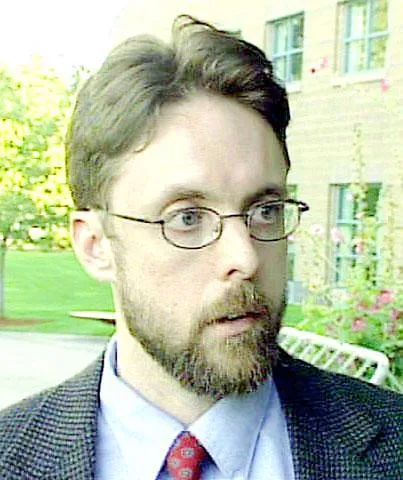 Photo: Brandon Mayfield, via www.taipeitimes.com
The FBI's internal review acknowledged that confirmation bias had played a role: once examiners knew Mayfield was a person of interest, they found what they were looking for. The very thing that fingerprint analysis was supposed to be immune to — human subjectivity — had produced a serious misidentification.
Mayfield's case was unusually visible because it involved international terrorism and a wrongful arrest that couldn't be quietly buried. But researchers studying the field suspected it wasn't unusual at all.
What the Science Actually Shows
In 2009, the National Academy of Sciences released a landmark report on forensic evidence that rattled the legal world. The report examined multiple forensic disciplines — bite mark analysis, hair comparison, blood spatter interpretation, and fingerprinting — and found that most of them lacked the scientific foundation that courts had long assumed they possessed.
On fingerprints specifically, the report noted that no large-scale studies had established a reliable error rate for fingerprint examiners, that there were no universal standards for how many matching features constituted a positive identification, and that the claim of absolute uniqueness — while probably true — had never been proven with the kind of statistical rigor that should underpin evidence used in criminal cases.
Subsequent studies have filled in some of those gaps, and the findings are uncomfortable. A 2011 study published in the journal Forensic Science International found that experienced fingerprint examiners, when tested with difficult latent prints, produced inconsistent results — and that the same examiner sometimes reached different conclusions when shown the same print at different times. A 2016 study found error rates in challenging comparisons that reached into the single-digit percentages. That sounds small until you remember how many fingerprint comparisons are made in American courts every year.
Researchers have also documented the problem of "contextual bias" — the tendency for examiners to reach conclusions that align with what investigators already believe. Studies have shown that when examiners are told a suspect has confessed, they're more likely to declare a match on ambiguous prints. The analysis is supposed to be objective. The human performing it is not.
Why It's So Hard to Change
Fingerprint evidence has an enormous amount of institutional momentum behind it. Law enforcement agencies have trained generations of examiners. Courts have built decades of precedent. Prosecutors have won convictions. Defense attorneys who challenge fingerprint evidence still face juries conditioned by decades of crime television to regard the technique as infallible.
There's also the awkward downstream question: if fingerprint evidence is less reliable than claimed, what does that mean for convictions already on the books? Courts have generally been reluctant to pull that thread.
Reform has been slow and uneven. Some jurisdictions have moved toward requiring examiners to document their methodology before knowing case context. The FBI updated its standards after the Mayfield case. Professional organizations have begun working on more rigorous proficiency testing. But the courtroom presentation of fingerprint evidence — often delivered with the same absolute confidence that has characterized it for a century — hasn't caught up with what researchers now understand.
The Bigger Picture
Fingerprinting is probably still one of the more reliable tools in forensic science, especially compared to the techniques the NAS report found even weaker. The problem isn't that fingerprints are useless. The problem is the gap between how fingerprint evidence is presented in court and what the science actually supports.
"This print matches the defendant" and "this print is consistent with the defendant and was assessed by an examiner with a documented error rate" are very different statements. American courtrooms have heard the first one for over a hundred years. The second one is closer to what the evidence actually allows.
The story of fingerprinting is really a story about how authority compounds. A technique that seemed scientific got admitted to court. Courts kept admitting it because courts before them had. Prosecutors described it as certain because that's how it had always been described. And somewhere along the way, a tool with real value but real limitations became, in the public mind, something close to infallible.
It was never quite so.