SPF 50 Is Not Twice the Protection of SPF 25 — The Math Behind Sunscreen Is Weirder Than the Label Suggests
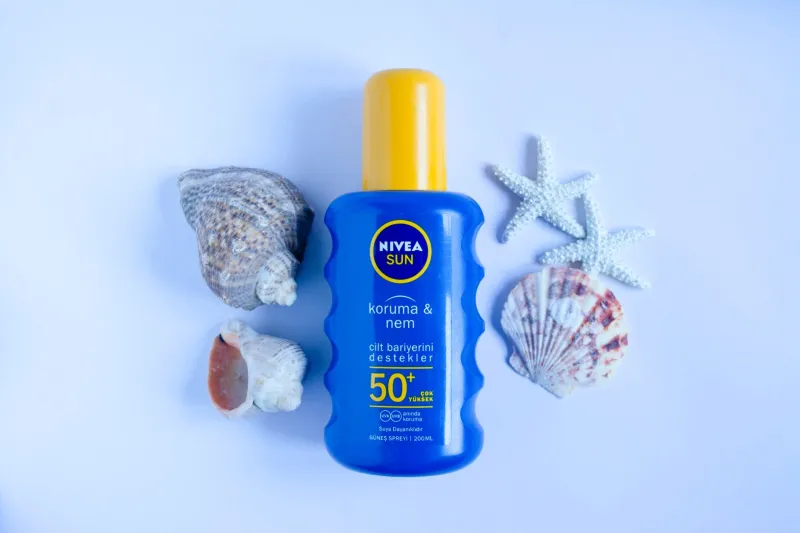
Every summer, millions of Americans stand in the sunscreen aisle doing the same instinctive math: SPF 50 must be about twice as good as SPF 25, right? So maybe SPF 100 is basically invincible? It feels logical. It's also wrong — and understanding why it's wrong changes how you should think about every sunscreen purchase you've ever made.
What People Assume SPF Means
SPF stands for Sun Protection Factor, and most people interpret it as a linear scale of protection. Under this assumption, SPF 30 is three times better than SPF 10, SPF 50 is five times better than SPF 10, and somewhere around SPF 100 you're basically wearing armor.
This interpretation is intuitive, widely shared, and incorrect. The scale doesn't work that way, and neither does ultraviolet radiation.
What SPF Actually Measures
Here's what SPF is actually testing. In a laboratory setting, researchers expose human skin to UV light — specifically UVB rays, which are the ones primarily responsible for sunburn — and measure how much UV energy it takes to cause a minimal sunburn on unprotected skin. Then they apply sunscreen and repeat the test.
The SPF number is the ratio between those two measurements. An SPF of 30 means it took 30 times more UV energy to cause a sunburn on protected skin than on unprotected skin.
The protection this translates to is expressed as a percentage of UVB rays blocked. And here's where the math stops being linear:
- SPF 15 blocks about 93% of UVB rays
- SPF 30 blocks about 97%
- SPF 50 blocks about 98%
- SPF 100 blocks about 99%
Look at those numbers carefully. The jump from SPF 15 to SPF 30 gives you an additional 4 percentage points of protection. The jump from SPF 30 to SPF 100 gives you about 2 more. The returns diminish sharply, and the difference between SPF 50 and SPF 100 in real-world use is, for most people, nearly imperceptible.
The Logarithmic Reality
The reason the scale compresses this way is that you're dealing with a percentage of what remains, not a fixed amount being subtracted. SPF 30 lets through 3.3% of UVB rays. SPF 50 lets through 2%. SPF 100 lets through 1%. Each step up the SPF ladder is cutting that remaining slice thinner, but the slices are already very thin by the time you're past SPF 30.
This is a logarithmic relationship — the same mathematical structure that governs earthquake intensity scales and sound decibels. Most people intuitively understand linear scales and find logarithmic ones confusing. Sunscreen manufacturers haven't gone out of their way to clarify the distinction.
What SPF Doesn't Tell You
The SPF number also has a meaningful limitation that the label doesn't advertise: it only directly measures UVB protection. UVB rays are responsible for sunburn, but UVA rays — which penetrate more deeply — are associated with skin aging and contribute to skin cancer risk. For years, American sunscreen labels didn't require UVA protection to be specified at all.
The FDA began requiring "broad spectrum" labeling in 2012, which indicates that a sunscreen offers some UVA protection proportional to its UVB protection. But there's no standardized UVA rating system on American labels the way there is in Europe and Australia, where separate UVA ratings are common. When you pick up a bottle of SPF 50 in the US, you know a lot about how it handles UVB and considerably less about UVA.
Dermatologists generally recommend looking for "broad spectrum" specifically rather than chasing higher SPF numbers for this reason.
The Application Problem Nobody Talks About
There's a bigger issue lurking behind all of this, and it's one that makes the SPF number even less meaningful in practice: almost nobody applies enough sunscreen.
The SPF rating on a bottle is calculated under laboratory conditions using a specific amount of product — 2 milligrams per square centimeter of skin. In practical terms, that works out to roughly one ounce (a full shot glass) to cover an average adult body. Studies consistently show that most people apply somewhere between 25% and 50% of that amount.
When you apply half the recommended amount, you don't get half the SPF. The protection drops much more steeply. SPF 50 applied at half the recommended quantity might deliver effective protection closer to SPF 7 or 8. This is why dermatologists emphasize application quantity and reapplication more than they emphasize buying the highest SPF available.
Reapplication matters too. Sunscreen degrades under UV exposure and gets removed by sweating and swimming. The standard recommendation is reapplication every two hours, or immediately after toweling off — a guideline that's followed far less often than it's given.
Why the High Numbers Keep Selling
If the difference between SPF 50 and SPF 100 is marginal and application technique matters far more than SPF number, why do high-SPF products dominate the market?
Partly because the numbers work as marketing. Higher feels safer. It's the same psychology that sells "1000-thread-count" sheets and "100x zoom" cameras — the number signals quality even when the practical difference is small.
The FDA has actually proposed capping SPF labels at "SPF 60+" to prevent consumers from being misled by very high numbers, arguing that anything above that threshold implies a level of protection that isn't meaningfully different from lower values. That proposal has been under discussion for years without final resolution.
What Dermatologists Actually Recommend
For most people with normal sun exposure, dermatologists recommend broad-spectrum SPF 30 as a practical minimum — applied generously and reapplied regularly. For extended outdoor time, higher water resistance, or fair skin, SPF 50 is reasonable. Beyond that, the marginal gains from higher numbers are largely theoretical if application habits are already imperfect.
The best sunscreen, as the saying goes, is the one you'll actually use correctly.
The Takeaway
SPF numbers aren't a linear scale, and SPF 50 is not twice the protection of SPF 25. The real differences between mid-range and high-SPF products are measured in fractions of a percentage point of UV blockage. How much you apply, whether you reapply, and whether the product covers both UVA and UVB matter far more than whether you grabbed the SPF 70 instead of the SPF 50. The label is telling you something real — just not quite what you assumed it was.