The Swimming Safety Rule That Protected Kids From an Imaginary Danger
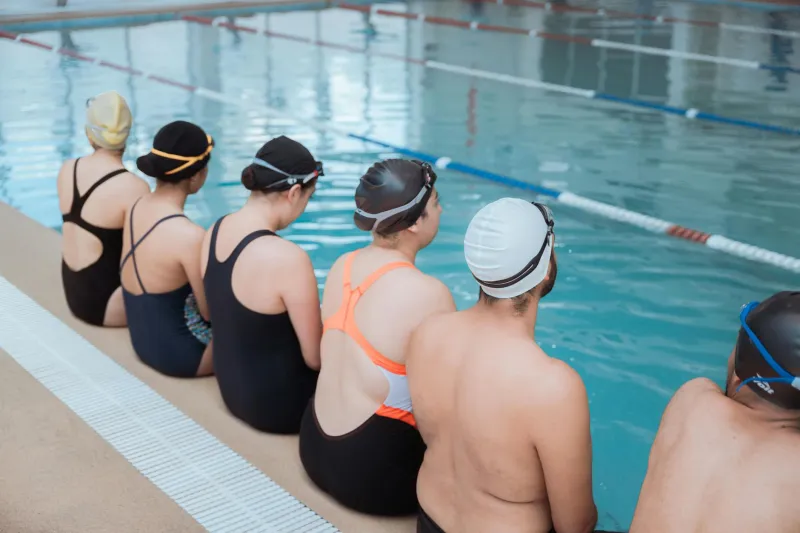
The Poolside Prison That Defined American Summers
For generations of American children, summer afternoons followed a predictable pattern: lunch, followed by exactly 30 minutes of mandatory poolside exile while parents enforced what seemed like an unbreakable law of nature. "You have to wait 30 minutes after eating before you can swim, or you'll get cramps and drown."
This rule was as universal as sunscreen and as non-negotiable as bedtime. Parents who might debate screen time limits or negotiate chore schedules became immovable objects when it came to post-meal swimming. The 30-minute rule wasn't just a suggestion — it was treated like a matter of life and death.
Here's the thing: no major medical organization has ever officially recommended waiting to swim after eating. The American Red Cross doesn't mention it in their swimming safety guidelines. The American Academy of Pediatrics has never issued warnings about post-meal swimming. The Centers for Disease Control and Prevention's drowning prevention resources make no mention of meal timing.
 Photo: Centers for Disease Control and Prevention, via www.iplivecams.com
 Photo: American Red Cross, via i.iplsc.com
So where did this ironclad rule come from, and why did an entire culture of parents enforce it with the dedication of lifeguards?
The Kernel of Truth That Grew Into a Safety Myth
The 30-minute rule isn't completely fabricated — it's based on a real physiological process that got dramatically misunderstood. When you eat a large meal, your body does redirect blood flow to your digestive system to help break down food. This process, called postprandial hyperemia, can theoretically reduce blood flow to your muscles.
In theory, this could make you feel sluggish or slightly less coordinated. Some people do experience mild fatigue after large meals, which is why the post-lunch energy dip is a real phenomenon in offices worldwide.
But here's where the logic leaps off a cliff: feeling slightly sluggish after a big meal is not the same as being unable to swim safely. The idea that this normal digestive process would cause dangerous muscle cramps that could lead to drowning isn't supported by any documented cases or medical research.
What Actually Happens When You Swim After Eating
Researchers have actually studied this question, mostly because parents kept asking about it. What they found was underwhelming: swimming after eating might make you feel slightly less energetic, but it doesn't significantly impair your ability to stay afloat or swim safely.
A study published in the International Journal of Sports Medicine found that while eating before exercise could affect performance in competitive athletes, it didn't create safety risks for recreational swimming. The digestive process simply doesn't redirect enough blood flow to create the kind of muscle impairment that would lead to drowning.
 Photo: International Journal of Sports Medicine, via i.pinimg.com
Most drowning experts point out that if post-meal swimming were genuinely dangerous, we'd see patterns in drowning statistics. Children would be more likely to drown in the hour after lunch. Emergency rooms would report clusters of swimming-related incidents in the early afternoon. Lifeguards would be trained to watch for signs of digestive distress.
None of these patterns exist. Drowning statistics show no correlation with meal timing, and experienced lifeguards report that they've never seen a swimming emergency that could be traced to someone eating before entering the water.
How Parental Anxiety Became Universal Law
So how did a minor physiological effect become an unquestioned safety rule? The answer lies in the psychology of parenting and the way safety advice spreads through communities.
Parents in the mid-20th century were becoming increasingly aware of safety risks that previous generations had ignored. Swimming pools were becoming more common in suburban backyards, and with them came new anxieties about water safety. Any piece of advice that promised to reduce drowning risk — even slightly — was embraced enthusiastically.
The 30-minute rule also had the appeal of being specific and actionable. Unlike vague advice like "supervise your children" or "teach them to swim well," the post-meal waiting period was concrete. Parents could set a timer, enforce a clear boundary, and feel like they were actively protecting their kids.
Once the rule became established in parenting culture, it took on a life of its own. Children who grew up with the 30-minute rule became parents who enforced the 30-minute rule, creating a multi-generational cycle of poolside waiting periods.
The Real Swimming Safety Issues That Matter
While parents spent decades timing post-meal swimming breaks, actual drowning prevention experts were focused on completely different factors. The leading causes of childhood drowning have nothing to do with meal timing and everything to do with supervision, swimming ability, and pool safety.
Lack of adult supervision is the single biggest factor in childhood drowning incidents. Children can drown in less than 20 seconds, often silently, which means constant visual supervision is crucial. But many parents felt comfortable relaxing their vigilance if they'd enforced the 30-minute rule, as if it provided some kind of safety buffer.
Inability to swim is another major factor. Children who haven't learned basic swimming skills are at much higher risk than children who've had proper swim instruction, regardless of when they last ate.
Pool barriers, life jackets, and CPR knowledge all have documented impacts on drowning prevention. Meal timing doesn't appear on any evidence-based swimming safety checklist.
Why the Myth Persists in the Age of Google
Even today, when parents can fact-check safety advice instantly, the 30-minute rule persists in many families. Part of this is simple tradition — rules that feel like common sense are hard to question, especially when they've been passed down through generations.
There's also a psychological comfort in following safety rules, even unnecessary ones. Enforcing a waiting period after meals doesn't harm anyone (except perhaps impatient children), and it provides parents with a sense of control over their child's safety.
Some parents also worry about being wrong. What if the 30-minute rule actually does prevent some rare but serious problem? The potential cost of ignoring the rule (a child's safety) seems to outweigh the benefit of debunking it (30 minutes of extra swim time).
The Lessons Hidden in Poolside Paranoia
The 30-minute swimming rule offers a perfect case study in how safety advice develops and spreads. A minor physiological effect gets amplified by parental anxiety, becomes codified as a specific rule, and then gets passed down through generations without anyone questioning the original evidence.
This process isn't unique to swimming safety. Many of the rules that feel like settled science — from sleep positions for babies to food safety guidelines — have similar stories of how reasonable caution evolved into rigid requirements.
The next time you find yourself enforcing a safety rule that "everyone knows," it might be worth asking: where did this rule actually come from? What evidence supports it? And are there more important safety measures that deserve your attention instead?
Sometimes the most dangerous thing about a safety rule isn't breaking it — it's the false sense of security that comes from following it while ignoring the risks that actually matter.